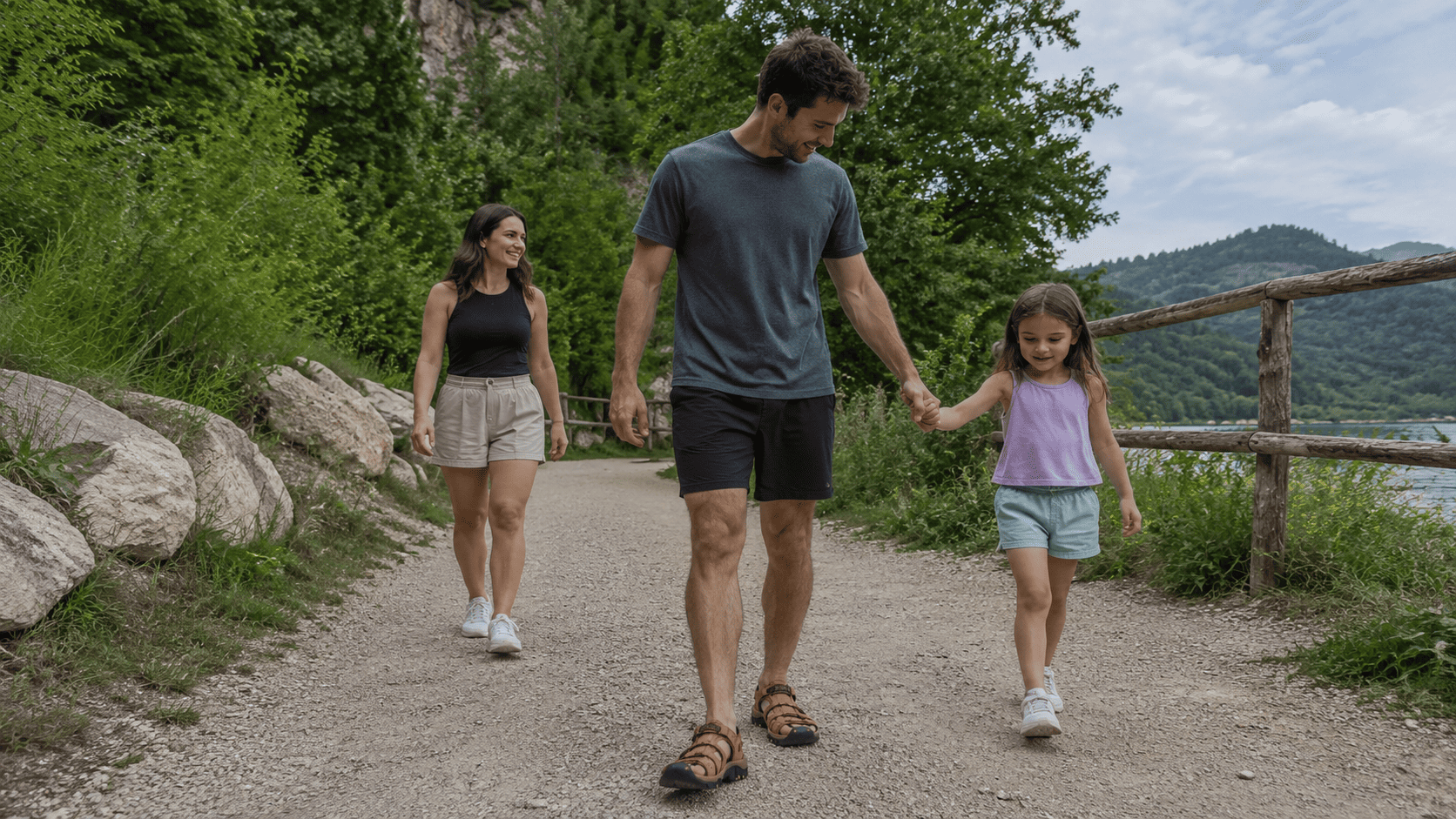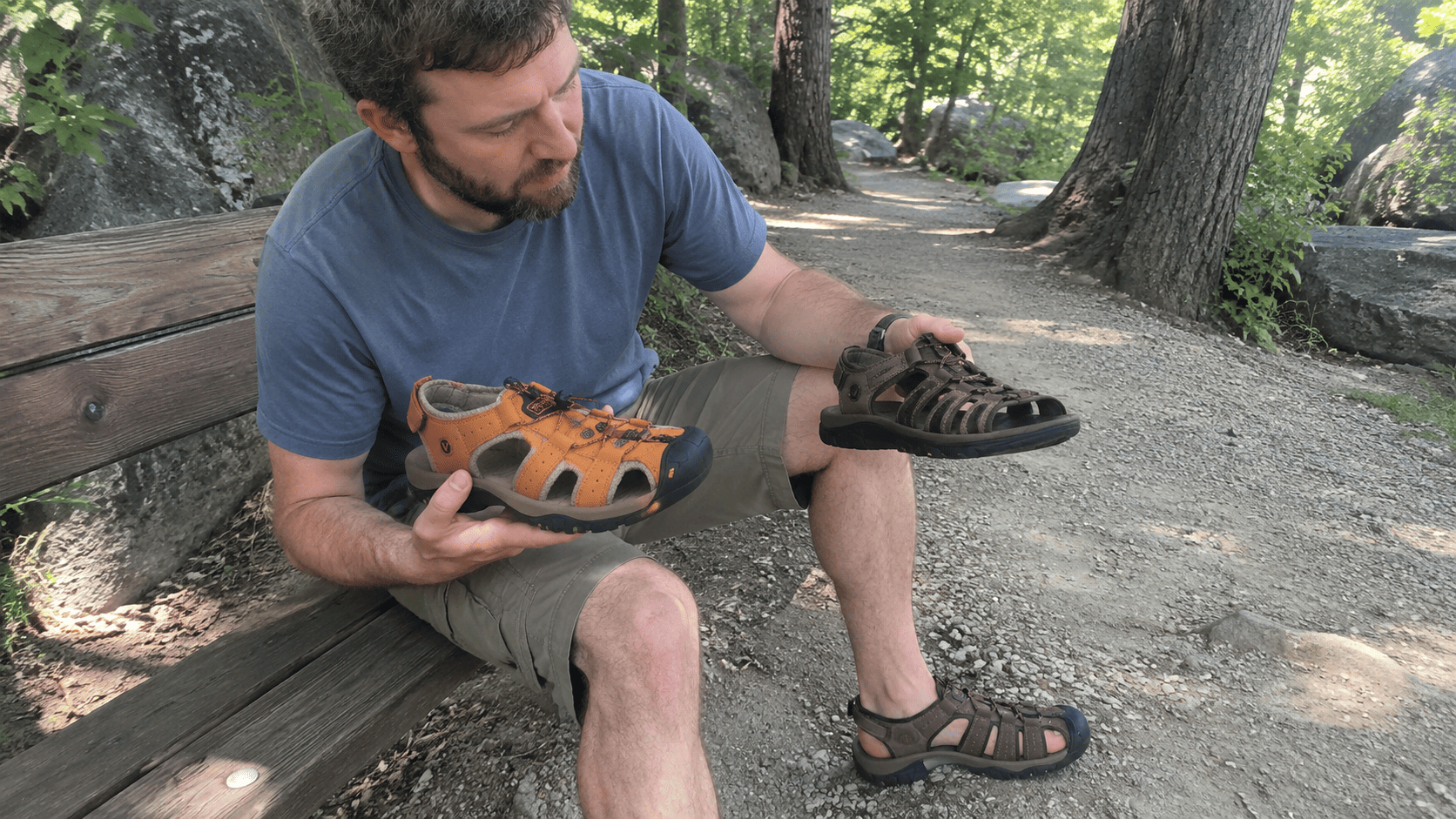

Comfortable sandals matter most on the days you did not plan for. The extra mile at the farmers market, the longer-than-expected hike, the afternoon spent standing at a cookout. Nobody thinks about their footwear until it starts to hurt, and by then the day is usually half over. Choosing comfortable sandals for long days on your feet comes down to a handful of specific things, and support is at the top of the list.
Why Comfort Fades After Hour Three
Almost any sandal feels fine for the first hour. The real test starts after that. As the day goes on, a flat, unsupportive footbed lets the arch collapse slightly with every step, and that small amount of strain compounds over hundreds or thousands of steps. By hour three, feet that started out fine begin to ache, and by hour six, that ache can spread to the knees and lower back. This is the gap that separates sandals people wear once and put away from sandals people reach for every day. Comfortable sandals for long days on your feet are not just about soft materials. They are about structure that keeps working as the hours add up.
Arch Support and Orthopedic Design
The single biggest factor in long-day comfort is arch support. Sandals built with an orthopedic footbed are designed specifically to reduce the kind of foot pain and heel fatigue that shows up later in the day rather than right away. That orthopedic support does not need to feel medical or clinical. In a well-designed sandal, it simply feels like the ground is doing less work against your foot with every step. Stride sandals use exactly this kind of orthopedic footbed, built for natural arch support, which is why they consistently show up in conversations about sandals that hold up past the first few hours.

Materials That Matter
Beyond the footbed, materials play a bigger role in comfort than most people expect. Straps that are too stiff can rub and create pressure points within a single day, while straps that are too soft can stretch out and stop holding the foot securely. The outsole matters too. A sandal that flexes naturally with your foot on uneven ground reduces strain, while a rigid outsole forces your arch and ankle to compensate with every step. Breathable materials also make a difference on long days, since sweat and heat buildup inside a sandal can cause blisters and discomfort even when the support itself is solid.
Fit and Sizing Tips
Even the most supportive sandal will feel wrong if it is sized incorrectly. A sandal that is slightly too big allows the foot to slide, which creates friction and blisters over a long day. One that is too small puts pressure on the toes and can cause the straps to dig in. When trying on sandals for long-day comfort, it helps to walk around for several minutes, not just stand still, and pay attention to whether the arch support lines up naturally with your foot rather than sitting slightly off. A proper fit combined with real orthopedic support is what actually prevents the fatigue that shows up hours into the day.
Signs You Need Better Support
If your feet regularly ache by early afternoon, if you find yourself shifting your weight constantly while standing, or if your lower back tightens up after a day of walking in sandals, those are signs your current footwear is not providing enough support. It is easy to blame the amount of walking rather than the sandal itself, but the right footbed can change that experience significantly. Comfortable sandals for long days on your feet should reduce those symptoms, not just tolerate them.
Final Checklist
Before buying your next pair, look for a footbed with real orthopedic support, an outsole that flexes naturally with uneven ground, and straps that hold the foot securely without rubbing. Try them on and actually walk, rather than judging comfort from a few seconds of standing in a store. If your feet usually decide how good a day was, whether that is a hike, a travel day, or just a long Saturday on your feet, support is what to check before you buy, not just style. A sandal that still feels good by hour six is doing its job. One that does not was never built for the kind of days most people actually have.

It is also worth remembering that comfort is not something you notice when it is working, only when it is missing. A well-built orthopedic footbed does its job quietly, keeping foot pain and fatigue from building up in the background while you go about a normal day. That is the real standard for comfortable sandals: not how they feel in the first ten minutes, but how little you think about your feet by the end of the day. When a sandal disappears like that, hour after hour, it has earned its place as your everyday pair.