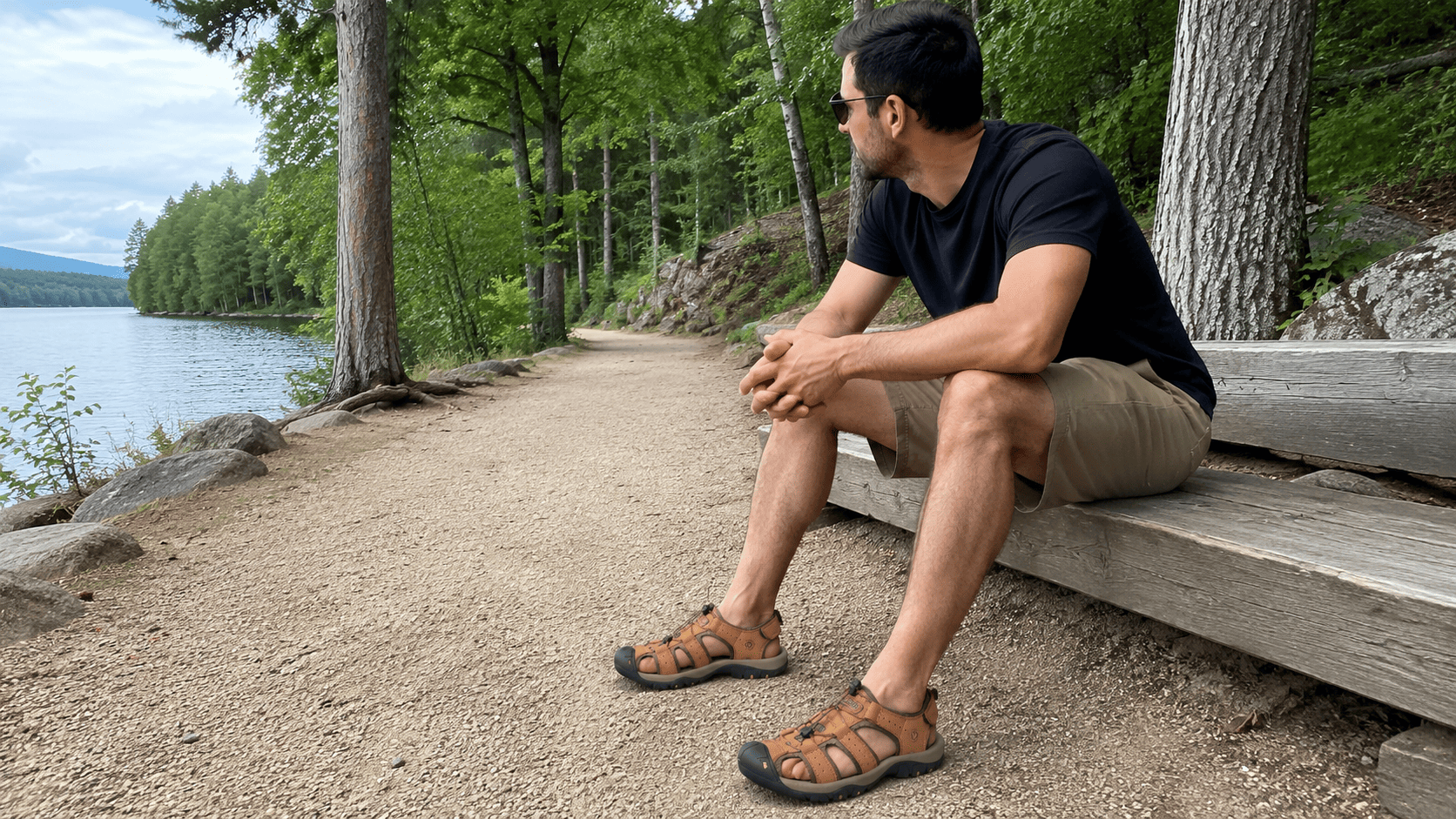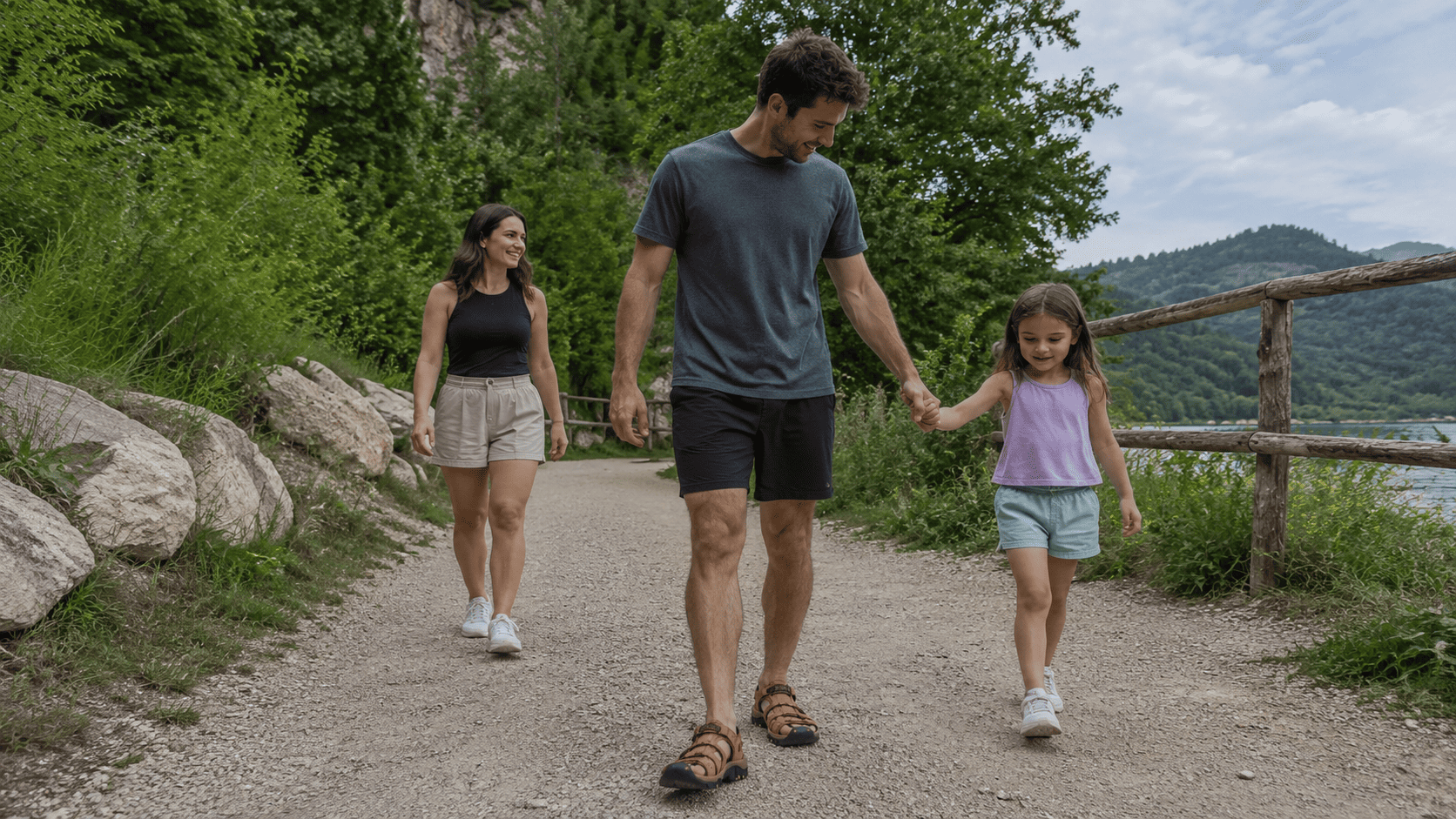

Traditional hiking sandals and Stride sandals get compared a lot, and it makes sense. On the surface, they look like they solve the same problem: open, breathable footwear for outdoor use. But the real difference shows up the moment you put weight on them, and it changes which one actually makes sense for your life.
Design Philosophy
Traditional hiking sandals are built around one goal: performance on technical terrain. Thick straps, aggressive lugged tread, and a rugged, gear-forward look are all designed to signal capability on a mountain trail or a river crossing. Stride sandals take a different approach entirely. They are built for men who are active but not training, for people who want to be outside without dressing like they are heading into the backcountry. That difference in philosophy shapes everything else about how the two categories are built.
Support and Footbed Technology
This is where the gap is widest. Stride sandals use an orthopedic footbed with built-in arch support, engineered to reduce pain and pressure points during long days on your feet. It is the kind of support usually associated with medical grade insoles, but integrated into the sandal itself. Most traditional hiking sandals, by contrast, rely on flat, minimally cushioned soles. That works fine for short technical outings where the sandal is on your feet for an hour or two at a time. It works far less well for a full day of walking, standing, or traveling, which is exactly the kind of day most men actually have. Reviewers consistently note that Stride's orthopedic support noticeably reduces foot fatigue by the end of the day, while flatter hiking sandals tend to leave feet sore and tired well before that.

Outsole and Grip
Traditional hiking sandals generally win on raw technical grip. Deep lugs and aggressive tread patterns are built for wet rock, river crossings, and loose scree. Stride sandals still hold their own on uneven or wet ground with a capable all terrain outsole, but the priority is different. Instead of maximizing grip for extreme terrain, Stride balances traction with everyday comfort, so the outsole works just as well on a sidewalk or a gravel parking lot as it does on a mellow trail. For most men, that trade-off makes sense, because the majority of their walking happens somewhere between pavement and trail, not on a technical scramble.
Break-In Time and Everyday Comfort
Traditional hiking sandals often need a break-in period. The thick straps and stiffer materials can rub or pinch until they soften up, which means the first few wears are not always comfortable. Stride sandals are designed to skip that step almost entirely. The orthopedic footbed and softer strap materials mean the sandal feels supportive and comfortable from the first wear, without the blister-prone adjustment period that comes with more technical designs. For someone who wants to wear their sandals daily rather than saving them for planned hikes, that matters more than it sounds like it should.
When Each Type Actually Makes Sense
There is still a place for traditional hiking sandals. If your weekends regularly involve technical trails, river crossings, or genuine backcountry travel, the aggressive grip and rugged build of a hiking sandal earns its keep. But for the much larger group of men whose outdoor time looks more like a walk through town, a family trip to Montana, or a farmers market on Saturday morning, that level of technical capability goes mostly unused. What those men actually need is support that lasts through a long day, a comfortable fit with no break-in period, and a look that works just as well off the trail as on it. That is the gap Stride sandals were built to fill.
Which One Fits Your Life
The honest answer depends on how you actually spend your time outside, not how you picture yourself spending it. If your outdoor life is genuinely technical, a traditional hiking sandal is the right tool. If it looks more like everyday movement, family travel, and long days on your feet that were not necessarily planned as a hike, the orthopedic support and all-day comfort in Stride sandals will serve you better. Most men fall into the second group, even if they own gear built for the first one. Choosing the sandal that matches how you actually live, rather than how a gear catalog markets its products, is the real difference between a sandal you wear constantly and one that sits in the closet after the second trip.


It also comes down to what your feet feel like after forty, not just what they can tolerate for an afternoon. A technical hiking sandal might survive a river crossing without complaint, but it rarely offers the kind of consistent arch support that prevents soreness on a normal Tuesday spent on your feet. Stride sandals were built around that everyday reality. The orthopedic support is not a marketing detail, it is the reason the sandal still feels good after eight hours instead of two. For most men comparing the two categories, that is the deciding factor, far more than lug depth or strap thickness.